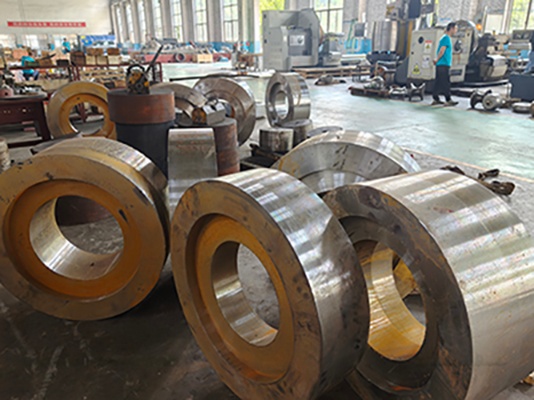
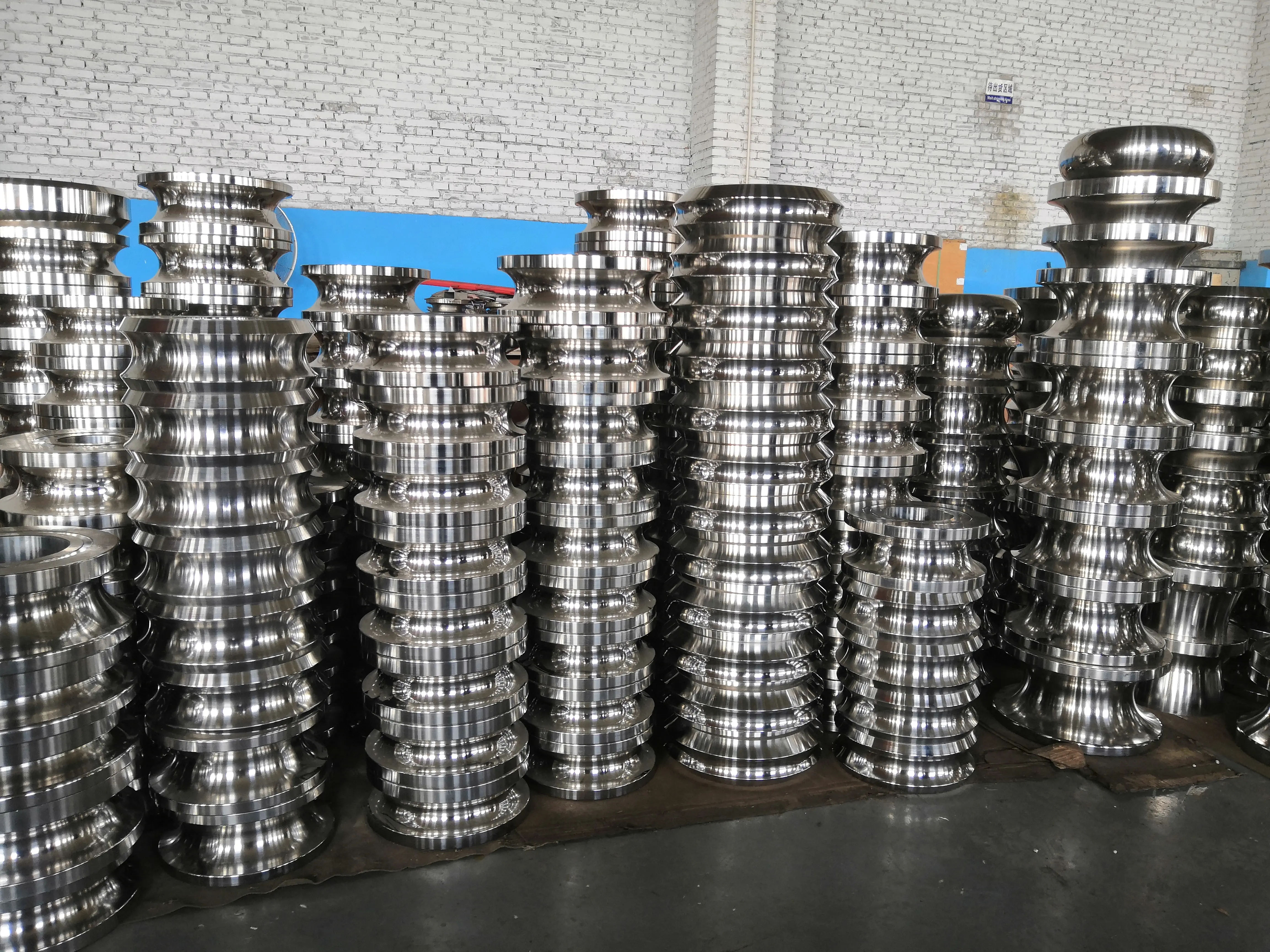
In the cold forming profile industry, rolls are core accessories of cold forming profile equipment, which directly determine the forming accuracy, surface quality and operational stability of profiles. The cold forming process does not require high-temperature heating. It relies on progressive extrusion, bending and shaping by multi-pass rolls to process raw materials such as steel strips and steel plates into various special-shaped metal profiles. Most profile processing enterprises pay close attention to the adaptability and working performance of rolls during equipment maintenance and process commissioning. This article elaborates on the main functions, working principles and practical application values of rolls for cold forming profile, providing references for profile production, equipment selection and process optimization.
1. Basic Working Principle of Rolls for Cold Forming Profile
Cold roll forming rolls are high-precision forming die accessories. They are installed in pairs on the upper and lower racks of cold forming units, with multiple groups of rolls working in series according to preset arrangement sequences. After entering the unit through the conveying device, the metal strip materials are progressively pressed by each group of rolls, completing procedures including flattening, bending, profiling, shaping and sizing. Finally, metal profiles with regular cross-sections and unified dimensions are manufactured. The entire forming process is completed at room temperature. With precise control of radian, groove depth and spacing, the rolls avoid defects such as tensile deformation, wrinkles and distortion of plates, and ensure the consistency of profile forming.
2. Core Functions of Rolls for Cold Forming Profile
2.1 Progressive Forming for Metal Profile Processing
This is the core function of forming rolls. Metal plates feature toughness and elastic rebound. A single bending operation cannot complete the forming of complex cross-sections and may easily cause stress concentration and plate cracking. Multiple groups of cold forming rolls adopt a progressive forming logic. They gradually change the cross-sectional shape of metal strips through preliminary flattening and pre-bending, as well as precise shaping and finishing. These rolls can process various products such as channel steel, angle steel, square tubes, round tubes, guide rails and special-shaped profiles, meeting the production demands of cold-formed profiles with different cross-sectional specifications.
2.2 Precise Size Control to Ensure Forming Accuracy
The roll radian, groove depth, spacing and parallelism directly determine the length, width, bending angle and cross-section flatness of profiles. High-precision rolls effectively control profile tolerances and reduce problems such as dimensional deviation, angle offset and asymmetric cross-sections, ensuring unified dimensions and standard specifications of mass-produced profiles. In high-precision processing scenarios including steel structures, door and window profiles, photovoltaic brackets and automotive profiles, the precision of rolls directly affects the assembly adaptability of finished profiles.
2.3 Plate Flattening and Surface Defect Elimination
Metal strips may have inherent warping, uneven edges and slight wrinkles during feeding. The front-end rolls can flatten and straighten raw materials to correct initial plate deformation. The rear finishing rolls perform secondary shaping on formed profiles, eliminating defects such as bending rebound, surface bulges and irregular edges. This makes the profile surface smooth and lines regular, improving the appearance quality of finished products.
2.4 Elastic Rebound Offset to Stabilize Profile Structure
Metal materials have elastic rebound properties, which may cause angular rebound and shape reset after cold forming, resulting in substandard profile specifications. Special cold forming rolls are designed with targeted roller structures according to the rebound coefficient and thickness characteristics of different materials. Through precise over-bending compensation and pressure shaping, they offset the elastic rebound of plates, lock the forming state of profiles, and ensure long-term structural stability without deformation or angular offset.
2.5 Support Continuous Production and Improve Processing Efficiency
High-quality rolls feature uniform surface hardness and stable wear resistance. They operate smoothly with accurate meshing, adapting to long-term and high-speed continuous production. The stable roll structure reduces operational failures such as jamming, deviation and material blockage, lowering equipment shutdown and commissioning frequency. It effectively improves the overall operating efficiency of cold roll forming production lines and meets the needs of large-scale and batch industrial production.
2.6 Protect Plate Surface and Reduce Processing Losses
Finely processed and polished rolls have high surface smoothness without burrs or hard spots. They avoid scratches and abrasions on metal plates during rolling, effectively protecting the integrity of profile paint layers, galvanized layers and stainless steel substrates. This reduces surface defects such as scratches and peeling, lowers product loss rates and improves qualified product rates.
3. Practical Value of High-Quality Rolls in Cold Forming Production
As core die accessories for cold forming equipment, the material, processing precision and wear resistance of rolls affect the product quality and production cost of the entire production line. Properly matched rolls stabilize profile forming quality, reduce defective products and rework, and cut labor and material costs for subsequent shaping and repair. Meanwhile, wear-resistant rolls extend replacement cycles, reduce equipment maintenance frequency, stabilize production line operation, and support enterprises in standardized and large-scale profile production.
4. Daily Matching and Maintenance Tips for Forming Rolls
Cold-formed profiles with different materials, thicknesses and specifications need matched roll types and materials to avoid forming defects. In daily production, it is necessary to regularly check the wear condition, parallelism and assembly gaps of rolls, clean surface impurities and oil stains, and implement lubrication and protection measures. Timely repair or replacement of severely worn, deformed and damaged rolls can effectively avoid poor forming, dimensional deviation and surface flaws of profiles.
Conclusion
The core functions of rolls for cold forming profile include progressive forming, precision control, surface shaping, rebound offset, stable production and surface protection. As key forming accessories of cold forming production lines, rolls determine the dimensional accuracy, appearance quality and structural stability of profiles, and also affect the production efficiency and operating costs of the production line. Reasonable selection and standardized maintenance of rolls are important measures for cold forming enterprises to stabilize product quality, reduce production losses and improve production efficiency.


Contact Person: Ms Liu
Tel: +86-17736028207
Email: mirror.liu@hongqiroll.com
Web: www.hongqiroll.com
Address: Chenglang Section, Jicun Town
Yuanshi County, Shijiazhuang City, Hebei, China, 051131
Copyright © 2025 Shijiazhuang Hongqi Roll Manufacturing Co., Ltd All rights reserved
Friendship Link Welded Ball Valve