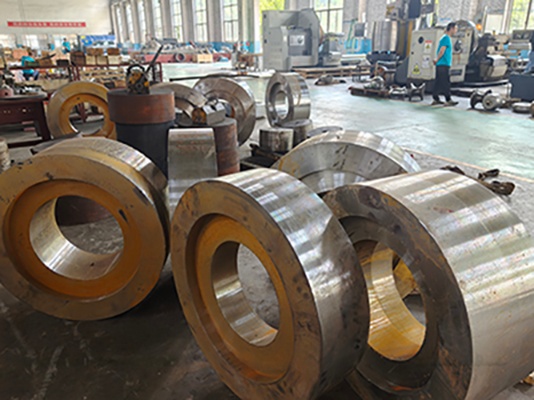
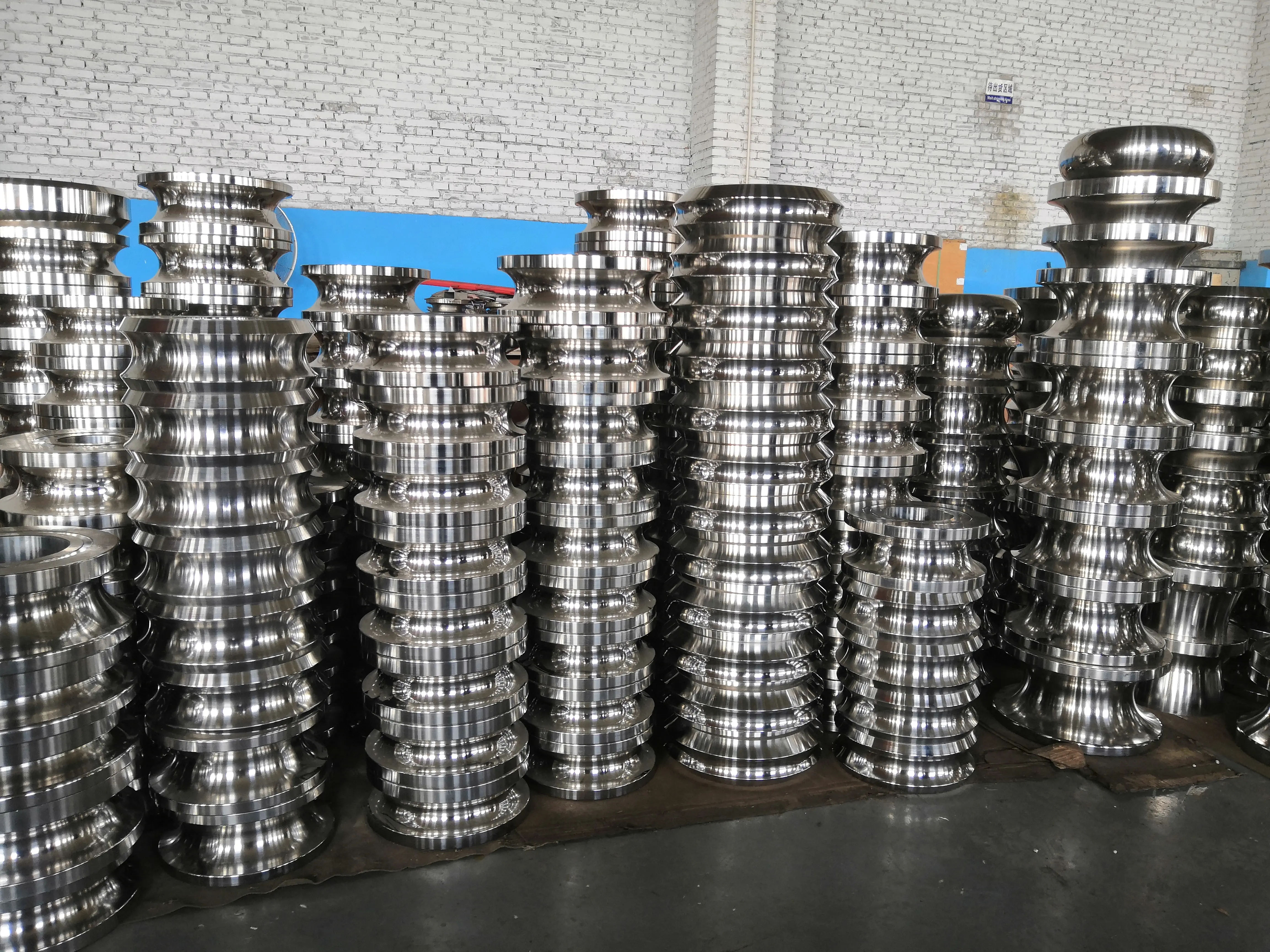
On ERW tube production lines, for stainless steel tube equipment and galvanized tube manufacturing systems, ERW tube rollers are core precision components that govern tube forming accuracy, surface finish and overall production stability. Tube processing enterprises pay close attention to the functions and application value of ERW tube rollers during equipment maintenance, component selection and production‑line upgrades.
Many operators treat rollers merely as simple pressing parts, ignoring their vital roles in tube forming, dimension calibration, weld shaping and tube sizing. Properly‑made ERW tube rollers can effectively minimize typical production defects including tube deformation, strip wandering, surface wrinkling and weld mis‑alignment, supporting reliable operation and high yield across the whole ERW tube line. This article explains the main functions, working principles, different‑role categories and industrial uses of ERW tube rollers, offering practical reference for tube‑maker component selection and equipment maintenance.
1. Basic Working Principle of ERW Tube Rollers
Standard ERW tube manufacturing workflow covers uncoiling steel strip, feeding, roll forming, high‑frequency resistance welding, shaping‑sizing and cutting. Installed within forming and sizing stands, multiple groups of ERW tube rollers feature contoured roller surfaces to deliver progressive extrusion, bending and shaping force against incoming steel strip.
In continuous running mode, flat steel strip travels through ERW tube rollers at successive stations and is gradually bent into a tubular blank. After welding, shaping rollers correct roundness and straightness deviations. The final output is dimensionally consistent, smooth and structurally sound ERW tubes. The whole standardized continuous tube‑making process depends on the accurate constraining and shaping performance of ERW tube rollers.
2. Core Functions of ERW Tube Rollers
2.1 Progressive Forming for Steel Strip
This represents the most fundamental function of ERW tube rollers. Flat steel strip cannot be directly welded into tubing. Forming rollers apply even pressure to strip edges and central areas to achieve gradual bending and closing following pre‑set radius parameters. Multi‑step progressive forming prevents strip stretching, surface wrinkling and edge cracking that may arise from heavy one‑shot compression, securing well‑defined initial tube geometry.
2.2 Accurate Limiting and Guidance to Prevent Tube Wandering
ERW tube lines run at high continuous speeds, which may lead to steel‑strip offset and uneven feeding. ERW tube rollers incorporate precision limiting features to restrain and correct strip travel paths, keeping material centered throughout processing. This helps avoid tube wandering, uneven wall thickness and tube skewing, sustaining non‑stop stable production.
2.3 Weld Seam Shaping and Surface Improvement
Post‑weld seams often show bulges, mis‑alignment and uneven surfaces, which hurt tube appearance and downstream performance. Shaping and extrusion rollers perform secondary compression and trimming on welded tube bodies. They smooth weld bulges, remove surface irregularities and fix weld mis‑alignment, improving overall roundness, surface flatness and structural uniformity of finished ERW tubes.
2.4 Sizing Calibration to Secure Consistent Dimensional Accuracy
Tubes after forming and welding normally carry minor diameter deviations and cannot meet factory specifications. Sizing rollers with standard roller profiles carry out precision compression and shaping on semi‑finished tubes. Outer diameter, roundness and straightness get calibrated, dimensional tolerances get eliminated, and batch‑to‑batch specification consistency is achieved. The sized tubes are ready for subsequent cutting, installation and further processing.
2.5 Stabilise Tube Structure and Reduce Defect Rates
High‑speed continuous production may trigger metal spring‑back, tube relaxation and local indentation. ERW tube rollers deliver steady, uniform restraining force to counteract spring‑back stress and stabilise tube geometry. This lowers reject rates caused by wrinkling, denting, deformation and cracking, cuts material loss and lifts finished‑product yield.
2.5 Enable High‑Speed Continuous Production
High‑precision, high‑hardness ERW tube rollers have fine surface finish and good wear resistance. They create uniform contact friction without scratching tube surfaces, suiting long‑duration high‑speed line operation. Reliable roller performance reduces machine halts, frequent adjustments and component‑replacement frequency, supporting sustained line running and raising overall production output.
3. Functional Differences Among Different ERW Tube Roller Types
A full ERW tube production line deploys multiple sets of ERW tube rollers with distinct tasks, working together to complete tube manufacturing. Each group serves a clear‑cut purpose.
Forming Rollers: Complete initial bending and closing of steel strip, transforming flat strip into tubular blanks as key forming components.
Extrusion Rollers: Concentrate on weld‑zone processing, squeezing tube edges together to assist ERW welding and improve weld compactness.
Shaping Rollers: Repair local deformation and weld bulges, optimise tube roundness and surface flatness to upgrade visual quality.
Sizing Rollers: Precisely adjust tube outer diameter and unify dimensional tolerances for standardised finished tube dimensions.
4. Extra Benefits of Quality ERW Tube Rollers for Tube Manufacturing
Well‑engineered ERW tube rollers bring extra operational gains beyond basic forming duties. Wear‑resistant rollers extend service life, reduce downtime and lower maintenance expenses. Accurate roller‑profile designs support production of high‑spec stainless steel tubes, galvanized tubes and other precision tubing, expanding the production line’s processing scope.
Furthermore, stable‑performing ERW tube rollers maintain long‑term forming precision and reduce defective output, helping manufacturers control production costs. The resulting qualified tubes are widely used for building piping, fluid conveyance and precision industrial tubular systems.
Conclusion
To sum up, themain functions of ERW tube rollers include six key aspects: progressive steel‑strip forming, feed limiting and guiding, weld‑seam shaping correction, tube‑diameter sizing calibration, tube‑structure stabilisation and high‑speed continuous manufacturing. As vital precision parts for ERW tube mills, ERW tube rollers’ accuracy and quality directly decide finished‑tube dimensional precision, surface flatness and qualification rate. Selecting high‑precision, wear‑resistant ERW tube rollers allows tube producers to optimise production workflows, cut production waste and lift overall product quality.

Contact Person: Ms Liu
Tel: +86-17736028207
Email: mirror.liu@hongqiroll.com
Web: www.hongqiroll.com
Address: Chenglang Section, Jicun Town
Yuanshi County, Shijiazhuang City, Hebei, China, 051131
Copyright © 2025 Shijiazhuang Hongqi Roll Manufacturing Co., Ltd All rights reserved
Friendship Link Welded Ball Valve