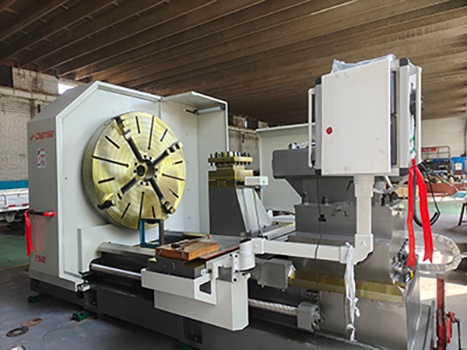
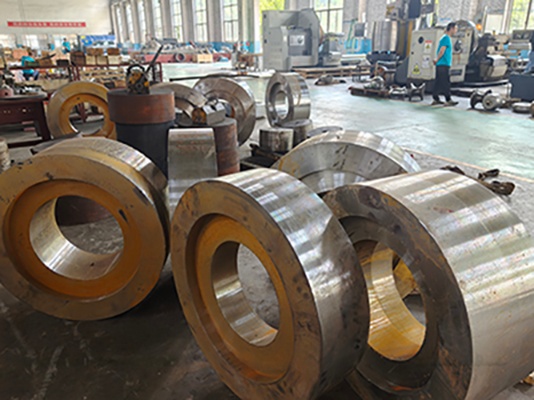
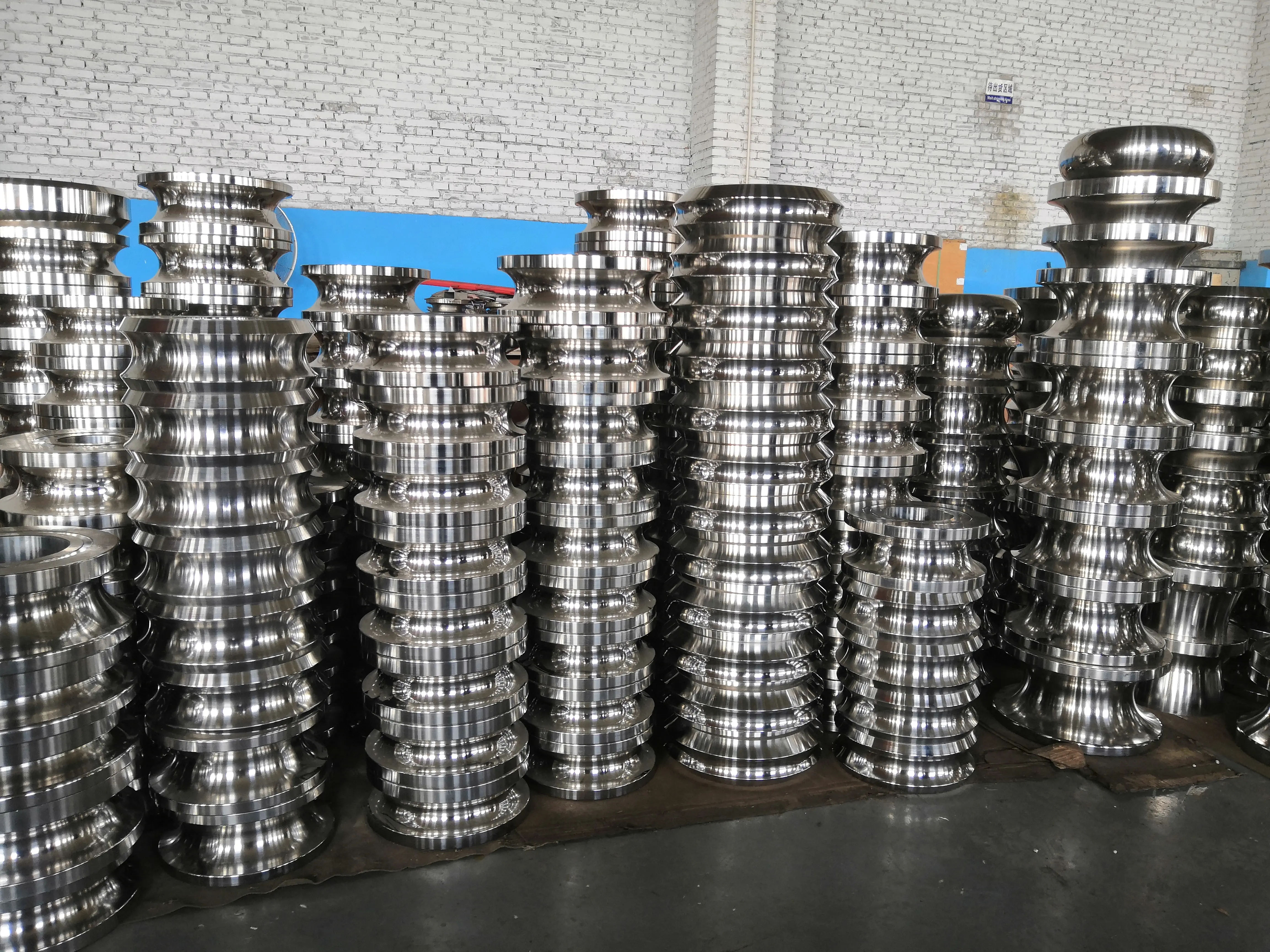
In the production and processing system of stainless steel tubes, rolls for stainless steel tube are key tooling components for extrusion units, welded tube production lines and finishing equipment. They are the core tooling directly involved in the plastic forming of tube materials. Stainless steel features high hardness and strong toughness, bringing high forming difficulty. Ordinary forming equipment struggles to guarantee the dimensional accuracy and surface quality of tubes, while rolls for stainless steel tube, with dedicated structures and wear-resistant properties, meet the special forming process requirements of stainless steel tubes.
Many practitioners in tube processing pay attention to the specific functions and application value of rolls for stainless steel tube during equipment selection, process commissioning and part replacement. Combined with the production processes of seamless stainless steel tubes and high-frequency welded stainless steel tubes, this article elaborates on the core working purposes of rolls for stainless steel tube, and explains their key roles in the whole process of forming, welding, finishing and quality control.
1. Progressive Tube Forming to Shape Steel Strip into Tubes
The most basic working purpose of rolls for stainless steel tube is to conduct progressive bending forming on stainless steel strips, turning flat steel strips into tubular blanks step by step, which serves as the core procedure of tube forming. Stainless steel has strong toughness and high deformation resistance. One-time forced forming may easily cause uneven stress, surface scratches, folds and other deformation issues.
During production, multiple sets of rolls for stainless steel tube are arranged in sequence according to working procedures. Gradual and uniform extrusion force bends both sides of the steel strip into a U shape first, then closes the blank into a tubular structure. This progressive forming method can effectively disperse the forming stress of stainless steel materials, avoid local stress concentration, ensure uniform roundness and smooth tube wall of the tube blank, and lay a good foundation for subsequent welding, rolling and sizing procedures. It can meet the processing requirements of stainless steel round tubes and special-shaped tubes of different specifications.
2. Compaction of Weld Seam to Ensure Sealing and Structural Strength of Welded Tubes
In high-frequency welded stainless steel tube production lines, rolls for stainless steel tube undertake the core work of squeezing and fusing weld seams, acting as key tooling that determines weld quality. After the steel strip is closed to form a tube blank, the edges are heated to a molten state by high-frequency heating. Paired rolls for stainless steel tube apply stable extrusion force to closely fit and squeeze the two sides of the weld seam for fusion.
Appropriate extrusion pressure enables sufficient fusion of weld metal, eliminating gaps, incomplete welding, slag inclusion and other process defects, improving the compactness of weld seams and overall structural strength, so that the mechanical properties of weld areas are close to those of the tube base metal. Meanwhile, rolls for stainless steel tube can regularize the forming state of welds, remove excess weld beads and burrs evenly, reduce the workload of subsequent grinding, and effectively prevent tube cracking and leakage caused by poor welding, ensuring the pressure bearing and sealing performance of stainless steel tubes.
3. Precision Sizing and Shaping to Control Dimensional Accuracy of Tubes
After stainless steel tube forming and welding, minor deviations may occur in tube diameter, roundness and straightness. Rolls for stainless steel tube can complete tube sizing and shape correction through subsequent finishing extrusion procedures. Relying on the roll pass size and symmetrical structure, the initially formed tubes are corrected by overall extrusion to unify the outer diameter specifications and correct deviations in tube ovality and bending degree.
For thin-walled stainless steel tubes and precision industrial stainless steel tubes, the finishing function of rolls for stainless steel tube is particularly important. Uniform radial extrusion force can optimize the uniformity of tube wall thickness and improve the surface flatness of tubes, making the finished tube dimensions conform to industry standards and matching precision requirements for equipment assembly. Stainless steel tubes sized and shaped by rolls feature higher specification consistency, suitable for high-precision application scenarios such as precision equipment assembly, fluid transportation and engineering matching.
4. Homogenization of Tube Wall Structure to Optimize Mechanical Properties of Tubes
In the production of seamless stainless steel tubes, rolls for stainless steel tube cooperate with mandrels to complete bidirectional extrusion and rolling, and homogenize the tube wall thickness. Through the coordinated force of internal and external rolls, the material of stainless steel tube wall undergoes directional plastic flow, improving the problems of uneven wall thickness and local thickness deviation around the tube, and optimizing the internal organizational structure of the tube.
The continuous and stable extrusion and rolling process can refine the internal grain structure of stainless steel, eliminate internal defects generated during forming, and improve the overall toughness, compression resistance and structural stability of tubes. Stainless steel tubes processed by rolls for stainless steel tube have more balanced mechanical properties and stronger pressure resistance and deformation resistance, suitable for harsh working conditions such as high-pressure fluid transportation, mechanical matching and special equipment.
5. Stabilizing Production Line to Prevent Tube Deviation and Deformation
During the continuous production of stainless steel tubes, high-speed conveying, forming and extrusion may cause tube blank deviation, offset and shaking, affecting production continuity and finished product quality. Rolls for stainless steel tube have auxiliary functions of precise guiding and limiting, which can restrict the running track of tubes and maintain straight conveying and uniform forming of tube bodies.
The coordinated operation of multiple sets of rolls for stainless steel tube can effectively offset the springback stress of stainless steel materials, reduce springback deformation, twisting and warping after tube forming, ensure stable operation of the whole production line, lower the rejection rate of tubes and improve the efficiency and qualified rate of continuous production. Meanwhile, it can reduce hard friction between tubes and equipment, decrease surface scratches, indentations and other appearance defects, and improve the surface finish of finished tubes.
6. Matching Multi-Specification Processing to Adapt to Diversified Production Needs
By replacing rolls for stainless steel tube with different pass shapes and specifications, manufacturers can quickly adapt to the production of stainless steel tubes with different outer diameters and wall thicknesses, covering thin-walled decorative tubes, thick-walled industrial tubes, special-shaped stainless steel tubes and other product types. Roll pass shapes can be customized and adjusted according to production demands to precisely match the forming parameters of various stainless steel tubes.
In flexible tube production, the replaceability of rolls for stainless steel tube helps production lines switch product specifications rapidly without large-scale transformation of equipment structures, effectively improving equipment utilization, meeting the production demands of small-batch and multi-specification stainless steel tubes, and reducing production and equipment investment costs for enterprises.
Conclusion
Overall, the working purposes of rolls for stainless steel tube run through the whole tube forming process, mainly including progressive tubular forming, weld seam extrusion fusion, precision sizing and shaping, tube wall uniformity optimization, production line stabilization and multi-specification adaptive processing. As wear-resistant core tooling for stainless steel tube production lines, the accuracy, material and process stability of rolls for stainless steel tube directly determine the appearance quality, dimensional accuracy, weld strength and mechanical properties of stainless steel tubes. They are key components to guarantee finished tube quality and stable production efficiency. Proper selection and maintenance of rolls for stainless steel tube can reduce tube process defects, improve the qualified rate of finished products, and meet various industrial and civil stainless steel tube production scenarios.

Contact Person: Ms Liu
Tel: +86-17736028207
Email: mirror.liu@hongqiroll.com
Web: www.hongqiroll.com
Address: Chenglang Section, Jicun Town
Yuanshi County, Shijiazhuang City, Hebei, China, 051131
Copyright © 2025 Shijiazhuang Hongqi Roll Manufacturing Co., Ltd All rights reserved
Friendship Link Welded Ball Valve