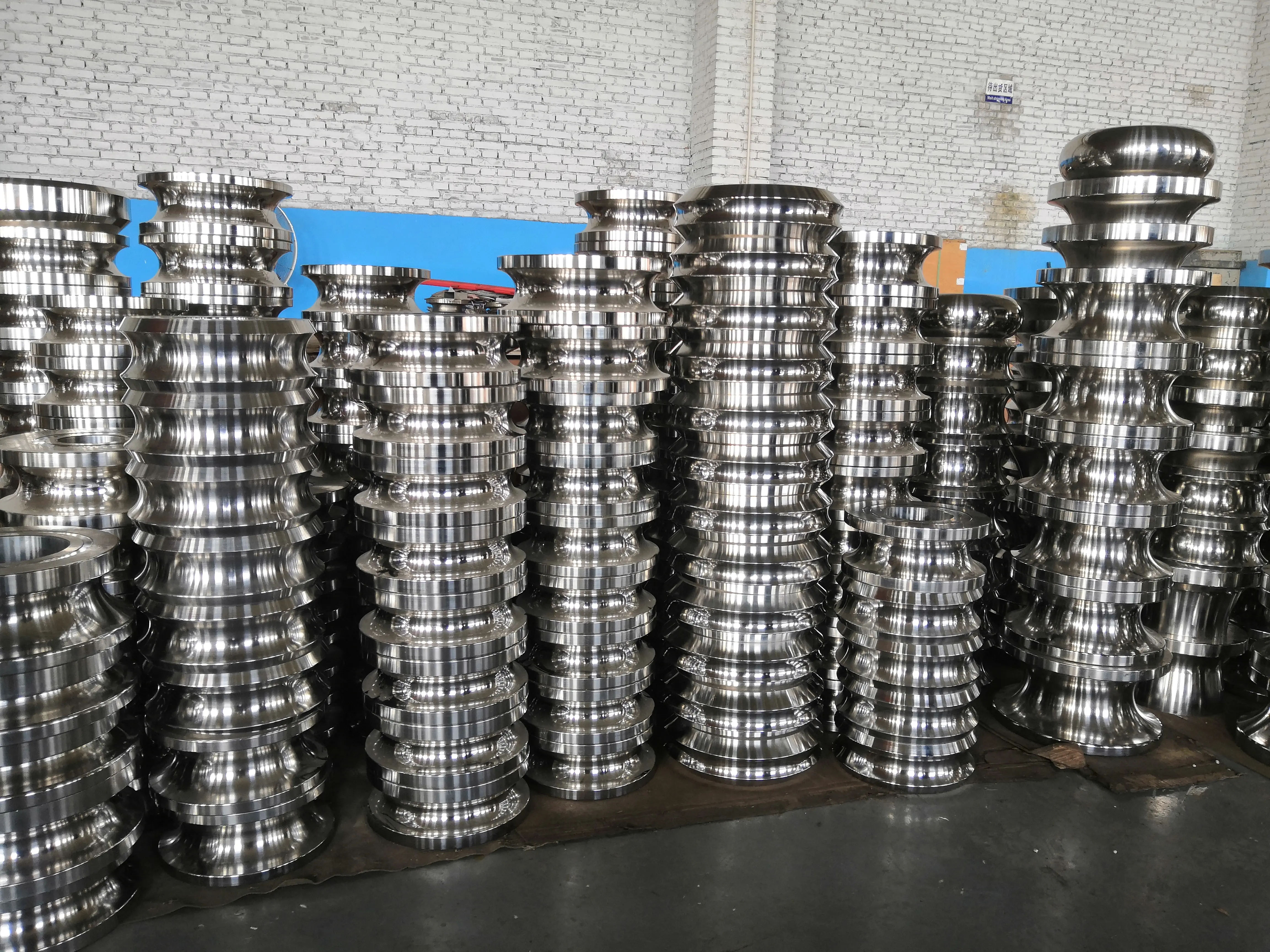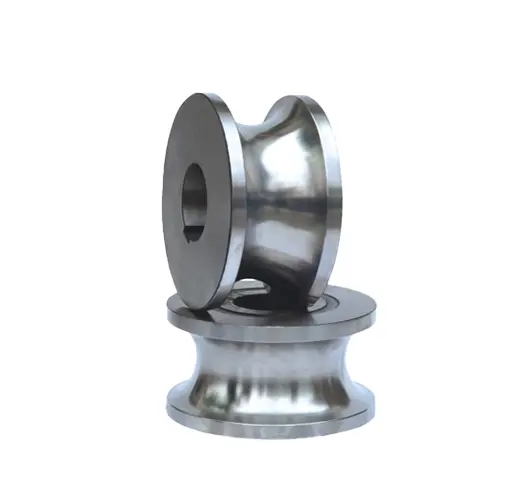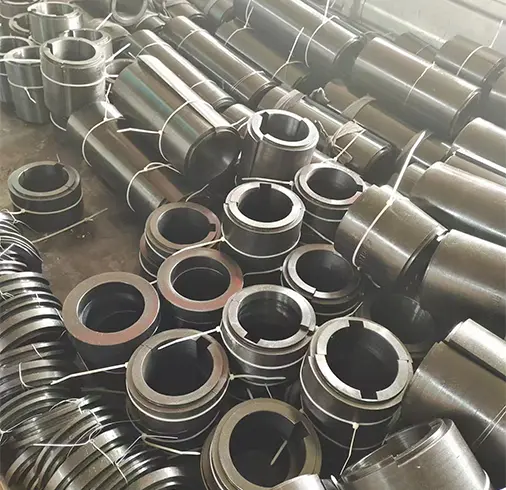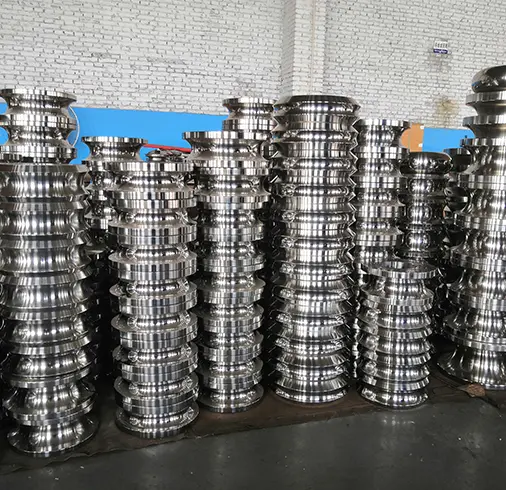

During continuous operation of cold forming profile lines, heat is generated by friction and deformation of sheet materials. Some working conditions also involve preheating of workpieces and poor heat dissipation of the environment, leaving the Rolls for Cold Forming Profile exposed to high temperatures for extended periods. High temperatures accelerate surface wear, reduce hardness, and may cause roll surface cracking, oxidative peeling and dimensional deformation. These issues affect the forming accuracy of profiles and increase downtime for maintenance. For continuous high-temperature production environments, protection measures can be implemented from multiple aspects, including cooling schemes, material selection and surface treatment, lubrication protection, production maintenance, and process parameter control.
Optimizing the roll cooling system serves as the primary protection measure. Common cooling methods include internal roll cooling and external roll cooling. Internal roll cooling reserves cooling channels inside the roll body, through which circulating cooling water is fed to remove accumulated heat inside the roll, control the overall temperature rise and reduce thermal deformation. The design ensures even distribution of water channels to avoid local hot spots. The water quality should be filtered to lower the risk of scale blocking pipelines, and the smoothness of water circuits needs regular inspection. External roll cooling mostly adopts air-mist cooling. Compressed air carries cooling medium to spray the roll surface, removing heat while forming a thin liquid film for both cooling and lubrication, suitable for high-speed continuous forming conditions. The flow rate and pressure of the cooling medium should match the production line speed to prevent insufficient cooling or excessive temperature difference of rolls caused by overcooling, which would generate thermal stress.
Select roll base materials with proper heat resistance and carry out surface strengthening treatment. Under long-term high-temperature working conditions, ordinary steel suffers obvious hardness reduction upon heating. Heat-resistant tool steel can be selected and treated by quenching and tempering to improve red hardness at high temperatures. Surface strengthening treatments such as hardfacing wear-resistant alloy or spraying hard coatings can be applied to roll surfaces to enhance resistance to high-temperature wear and oxidation. The coating or hardfacing layer shall guarantee bonding strength to reduce peeling risks under cyclic thermal stress.
Adopt special high-temperature lubricants reasonably. Lubrication not only reduces heat generated by friction between roll surfaces and sheets but also provides auxiliary cooling and isolates oxidation. Conventional lubricating oil tends to volatilize and coke in high-temperature environments, forming hard carbon deposits that scratch roll surfaces. High-temperature working conditions should use high-temperature resistant rolling lubricants with good thermal stability and low carbonization tendency. Continuous micro oil supply is adopted to form a uniform oil film on the roll surface. The oil volume should be controlled to prevent massive carbon accumulation at roll gaps and roll shoulders.
Control production process parameters to reduce heat load. Excessively fast forming speed or large forming angle will increase sheet deformation and frictional heat generation. On the premise of guaranteeing product quality, optimize pass allocation to disperse deformation of each pass and reduce local frictional heat. Meanwhile, control the incoming state of sheets and avoid hard oxide scale and welding slag on sheet surfaces, which may scratch roll surfaces and cause defects to expand further under high temperatures.
Implement routine inspection and maintenance protection. Monitor roll surface temperature regularly during continuous production, observe the appearance of roll surfaces, and check for cracks, peeling, discoloration and wear. Inspect the pressure and flow of cooling circuits regularly and troubleshoot pipeline leakage and blockage. During shutdown maintenance, remove carbon deposits and metal powder on roll surfaces to prevent hard particles from abrading rolls in the next production run. Avoid rapid heating and cooling during disassembly, assembly and storage of rolls to prevent roll cracking induced by thermal shock.
Improve heat dissipation in the workshop environment. Heat accumulates continuously in enclosed workshops and aggravates roll temperature rise. Exhaust and heat exchange devices can be added to enhance local ventilation at workstations, lower the basic ambient temperature and reduce heat dissipation resistance of rolls.
Establish a regular roll inspection system. Non-destructive testing can be used to detect fatigue cracks on roll surfaces. Early intervention at the stage of microcracks prevents crack propagation under cyclic high-temperature loads and roll failure.
In summary, protection of Rolls for Cold Forming Profile under continuous high-temperature working conditions centers on cooling systems, combined with heat-resistant materials, surface strengthening, high-temperature lubrication, process optimization and regular inspection. The coordinated application of multiple measures controls temperature rise of rolls, reduces failures such as high-temperature wear, oxidation and thermal fatigue cracking, maintains profile forming accuracy and extends the service life of rolls.

Contact Person: Ms Liu
Tel: +86-17736028207
Email: mirror.liu@hongqiroll.com
Web: www.hongqiroll.com
Address: Chenglang Section, Jicun Town
Yuanshi County, Shijiazhuang City, Hebei, China, 051131
Copyright © 2025 Shijiazhuang Hongqi Roll Manufacturing Co., Ltd All rights reserved
Friendship Link Control Valve